Advanced Post-Processing Techniques for Multi Jet Fusion (MJF) 3D Printing: The Complete Engineering Guide
March 27, 2023
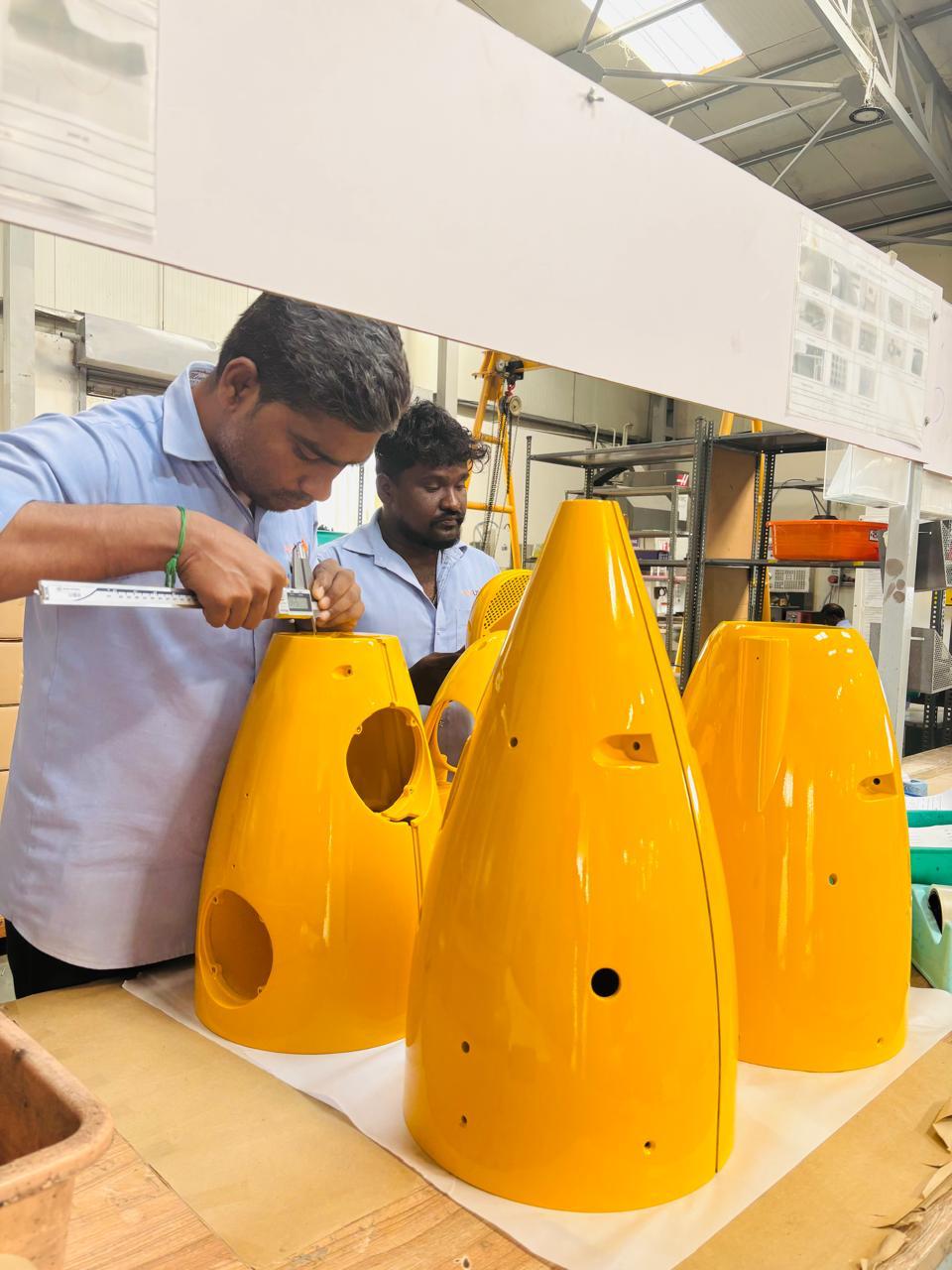
Industrial Painting Finish for MJF 3D Parts in Amuse
While Multi Jet Fusion (MJF) delivers robust, production-grade components straight from the build unit, raw "as-printed" parts rarely meet the demanding aesthetic or functional requirements of end-use applications. Post-processing bridges that gap. From eliminating surface porosity to enhancing mechanical durability, secondary operations transform raw MJF prints into high-performance, market-ready parts.
In this guide, we break down the primary post-processing stages for HP MJF parts, compare advanced finishing techniques—such as vapor smoothing, vibratory tumbling, and industrial 2K painting—and help you choose the ideal finish for your engineering specifications.
Raw Multi Jet Fusion parts typically printed in PA12, PA12S, PA11, PA12GB, or PP—emerge from the build unit nested in unsintered powder. In their raw state, they feature a matte, charcoal-gray finish with a slightly granular texture (typically an Ra surface roughness between 4.0 µm and 6.5 µm).
While dimensionally stable and mechanically isotropic, raw MJF parts require post-processing to achieve:
Hermetic & Liquid-Tight Sealing: Raw sintered nylon exhibits micro-porosity. Functional parts exposed to fluids, gases, or pressure require sealing to prevent absorption and leakage.
Surface Friction & Wear Reduction: Smoothing raw surfaces reduces frictional drag on moving assemblies, sliding mechanisms, and ergonomic enclosures.
Cosmetic & Brand Uniformity: Industrial painting, dyeing, or vapor polishing eliminates the mottled gray appearance, producing deep blacks, custom RAL/Pantone colors, or high-gloss cosmetic surfaces comparable to injection molding.
Enhanced Fatigue & Tensile Performance: Removing microscopic surface stress concentrations through chemical or mechanical polishing directly improves elongation at break and cyclic fatigue life.
Industrial PU Painted MJF Printed Part in Amuse
Post-processing is essential for creating high-quality, functional parts that meet the desired specifications. It can remove any support structures or excess material, smooth the surface finish, and add color or texture to the part. It is one of the essential steps in the 3D printing process, ensuring that the final product meets the required standards and functions as intended.
The Primary Cleaning & Unpacking Stages
Before applying any advanced finish, every MJF build passes through a standardized cleaning and de-powdering workflow:
Natural Cooling & Decooling: After fusing, the build unit cools uniformly inside a processing station to prevent warpage and preserve geometric tolerances.
De-Powdering (Powder Recovery): Unlike FDM or SLA technologies, MJF requires no support structures. Parts are encased in unfused powder that acts as its own support. High-efficiency vacuum extractors collect this loose material, reclaiming up to 80% of unused powder for subsequent build cycles.
Airblasting & Bead Cleaning: Residual surface powder is removed using automated or manual airblasting and light glass bead blasting, exposing the clean, raw gray nylon substrate.
Inspection & Preparation: Parts undergo dimensional checks and visual inspection before heading to specialized mechanical, thermal, or chemical finishing lines.
MJF 3D printing advanced post-processing techniques
We have made a list of advanced post-processing techniques, which are industry standards that can be applied to Multi Jet Fusion (MJF) 3D printed parts to enhance their properties and appearance. Here are some of them:
Airblasting: A high-pressure air stream removes excess powder from the part's surface.
Sanding: Sanding is a technique to smooth the part's surface by removing any visible layer lines or rough spots.
Vibratory Tumbling: This process involves placing the 3D parts in a vibratory tumbler with abrasive media, which removes any surface imperfections and smooths out the surface.[caption id="attachment_31995" align="alignnone" width="702"]
Chemical Polishing/Vapor Polishing: Chemical polishing is a process that uses a chemical solution to dissolve a small layer of material from the part's surface, resulting in a smooth and polished finish. Machine manufacturers like DyeMansion and AMT Technologies offer this solution.[caption id="attachment_31996" align="alignnone" width="702"]
Amuse MJF PA12 3D Printed and Vapour Smoothed with AMT Post Pro SF100
Bead Blasting or Shot Peening: This process involves using delicate beads or abrasive material that is blasted onto the surface of the MJF part to remove any excess material or surface imperfections. This process also enhances scratch resistance unlike just dyeing.
Water Jet Blasting: This technique involves using a high-pressure stream of water to remove any residual powder from the part's surface.
Graphite Blasting: This process uses graphite particles to clean and polish the MJF part's surface.[caption id="attachment_31810" align="alignnone" width="1292"]
Dying: Dying is a process that involves coloring the MJF parts to give them a more attractive appearance.
MJF PA12 3D Printed with Shot-Peened and Dyed Finish
Painting, smoking, and electroplating: These techniques improve the part's aesthetics and add additional properties, such as corrosion resistance. The cover picture of the blog is the MJF 3D-printed part in Amuse 3D Printing, followed by the painting process. Sometimes we refer to the mild painting on the graphite-blasted part as a smoking process.
Heat-set insert placement, laser marking, and EMC coating
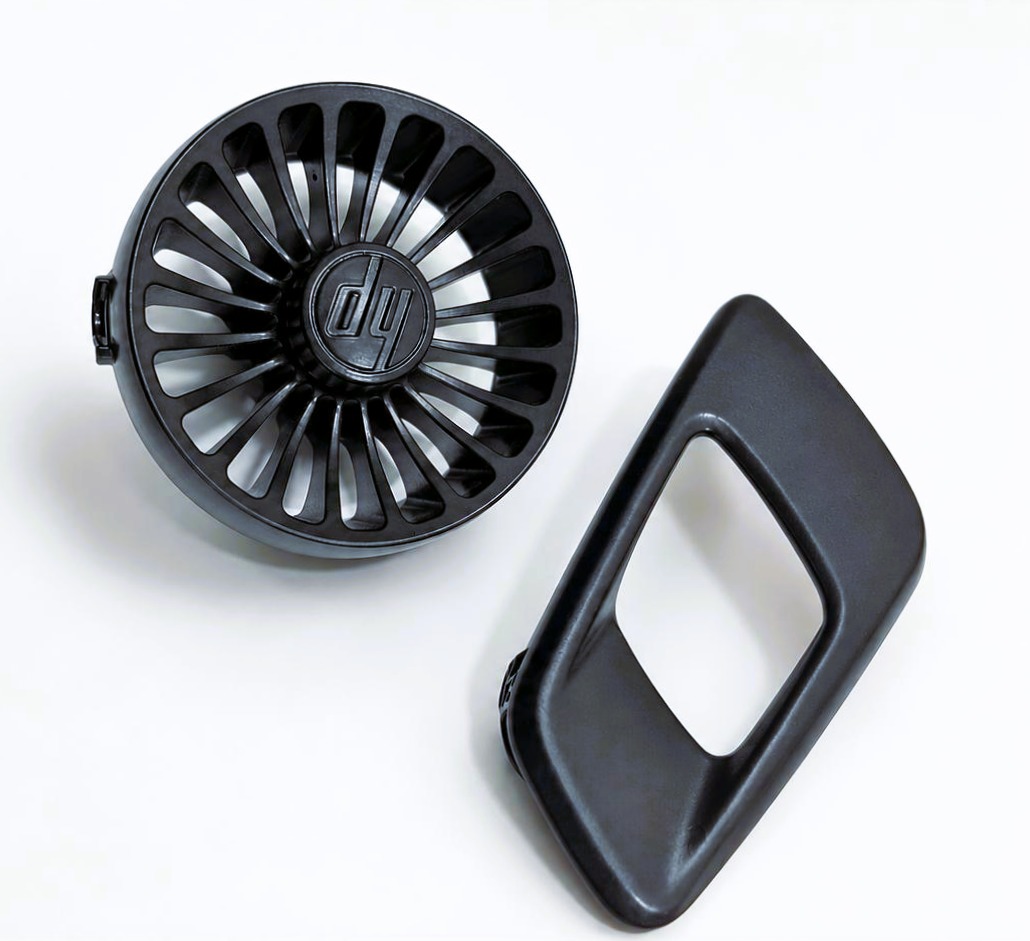
Connectors MJF 3D printed and black smoked in Amuse
These advanced post-processing techniques can be used individually or in combination to achieve the desired properties and appearance for the MJF 3D printed parts.
Made for MJF parts · Finished in-house
Choose the finish that fits your part.
From a clean production texture to a smooth, sealed surface, each Amuse 3D finish gives your MJF part a different look and feel. Choose based on the appearance, colour and dimensional needs of your application.
01 / BASE FINISH
Sand or Graphite Blasted
A uniform grey, matte surface with a smooth, powdery feel and no visible print layering.
LookIndustrial matteGood forFunctional parts and a clean base finish
02 / COLOUR
Smoke or Dye
Adds colour that penetrates the part’s surface, with little or mild change to dimensions.
LookColoured MJF surfaceGood forParts needing colour with minimal size change
03 / MATTE + DURABLE
Shot Peened & Dyed
Creates a uniform matte appearance with minimal material removal, helping preserve fine details and dimensional accuracy.
LookConsistent matte colourGood forProduction parts where detail matters
04 / SMOOTH + SEALED
Vapour Polishing
Smooths the outer surface to create a refined, sealed finish with an injection-moulded appearance.
LookSmooth, satin to semi-glossGood forVisible parts and smoother surface needs
05 / LOW-REFLECTION
Amuse Matt
A polished matte appearance inspired by injection-moulded components.
LookRefined matteNoteFinish can slightly increase dimensions
06 / HIGH-GLOSS
Amuse Gloss
A high-gloss finish with the polished appearance of painted automotive parts.
LookHigh-glossNoteFinish can slightly increase dimensions
07 / AMUSE SURFACE TECHNOLOGYPA12S
Amuse MoldTouch™
Our premium surface technology for a smoother appearance and refined feel, with enhanced resistance to moisture and many chemicals compared with untreated parts.
LookPremium, moulded-like surfaceGood forPA12S parts with elevated surface needs
Finish appearance and dimensional effects depend on material, geometry and process settings. Tell us what matters most—colour, texture, surface feel or fit—and our team can help recommend a suitable option. Critical dimensions and application requirements should be reviewed for the finished part.
Frequently Asked Questions (FAQ)
Does MJF 3D printing require support removal?
No. MJF is a powder-bed fusion technology where the surrounding unfused powder naturally supports cantilevered geometries and overhangs. There are no support structures to clip or dissolve.
Can MJF nylon parts be made completely waterproof?
Yes. While raw MJF parts absorb humidity and liquids over time, chemical vapor polishing or clear-coat epoxy sealing fully vitrifies the outer skin, making components 100% airtight and watertight.
Does post-processing change the tolerances of MJF parts?
Subtractive processes like extensive tumbling or chemical smoothing remove micro-layers (typically 10 to 30 microns), while additive processes like 2K painting add 20 to 50 microns. Account for these offsets in CAD when designing critical interference or snap-fit joints.
Final thoughts
In conclusion, the post-processing techniques involved in MJF 3D printing play a significant role in enhancing the quality of the printed parts. By implementing these advanced post-processing methods, you can achieve a superior surface finish in your 3D-printed parts.
Moreover, basic post-processing techniques such as painting and electroplating can also add to the aesthetic appeal of the printed parts and make them more visually appealing. With the increasing rise in MJF 3D printing, it is crucial to learn the significance of post-processing techniques and their impact on the final product. We hope this article helps you to understand the post-processing techniques of Multi Jet fusion 3D Printing.